· software · 4 min read
Software as content
Ideas no longer become blog posts. They become deployments. And the audience size depends only on the market you choose to serve.

These days the mantra is still going strong: developers are a thing of the past, AI will write all the software, and so on and so on. They keep repeating that in six months there will be no more developers left. Well, I’ve been hearing that exact line since mid-2023, so at least with the deadline we’re already off track.
What I do believe is happening, and more every day, is the proliferation of junk code and apps that never monetize. Of course one in ten thousand (or a hundred thousand) hits the jackpot, and that inspires everyone else. It’s not that this didn’t happen before — it did — just on a much smaller scale.
But it’s also true that more and more new software is being built by experienced developers who already know what they want, how they want it, and with which architecture. Their success rate is higher than the previous wave, but of course that doesn’t generate clickbait.
I compare it to the columnists of prestigious newspapers or magazines. They publish one article a week because it requires research, real work, and actual writing. You can’t improvise that. I myself, back in the 2010s until around 2020, when having a blog and writing a lot still helped with SEO and positioning your personal or company brand, would take days to turn an idea into a published post. It had to be good quality and actually useful.
Well, this is what I think is happening for many companies and people dedicated to development. Even though it has become a bit more commoditized, entire products (far beyond the MVP, way beyond) can now go from idea to a live deployment on a brand-new domain in three or four days.
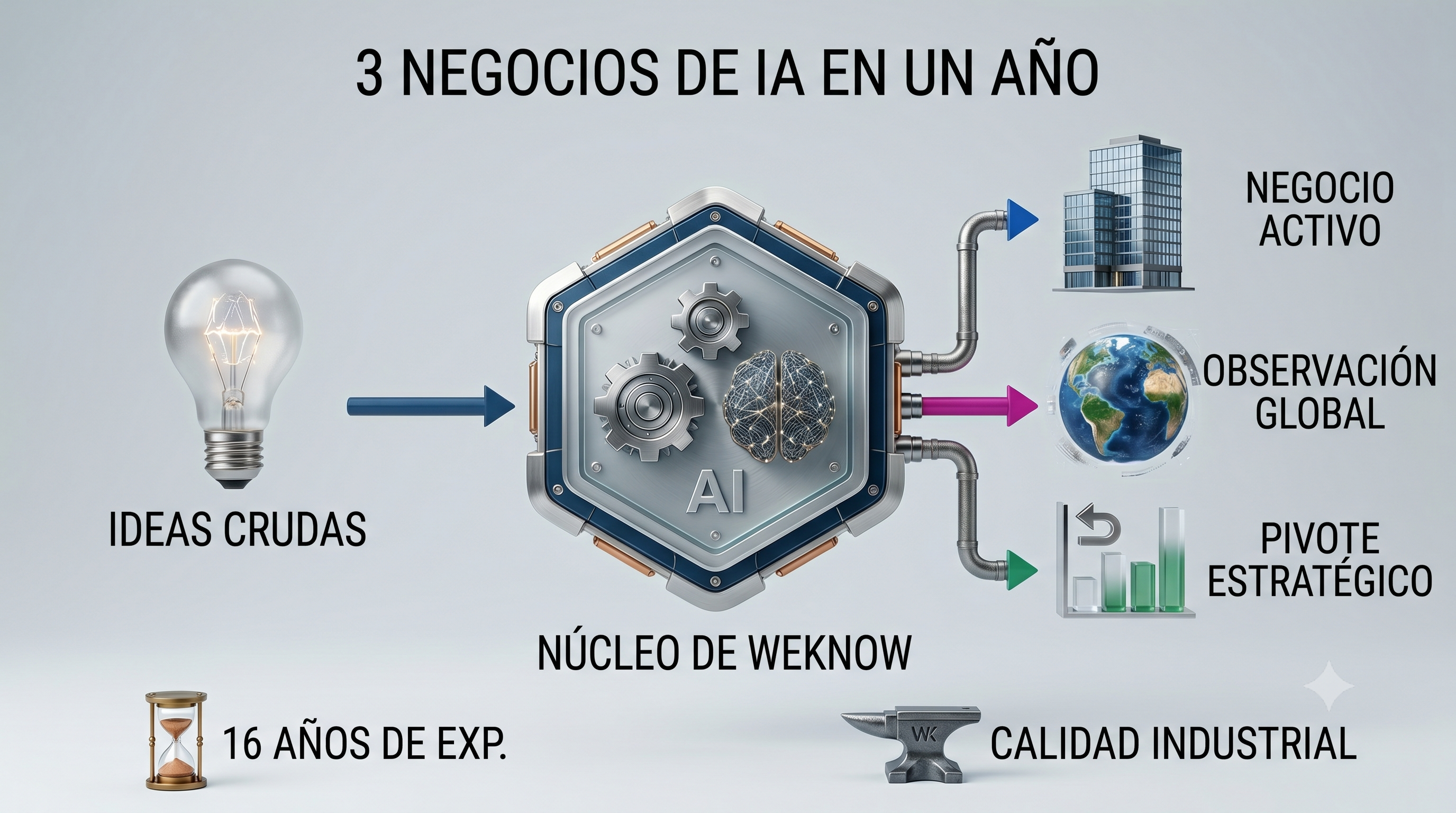
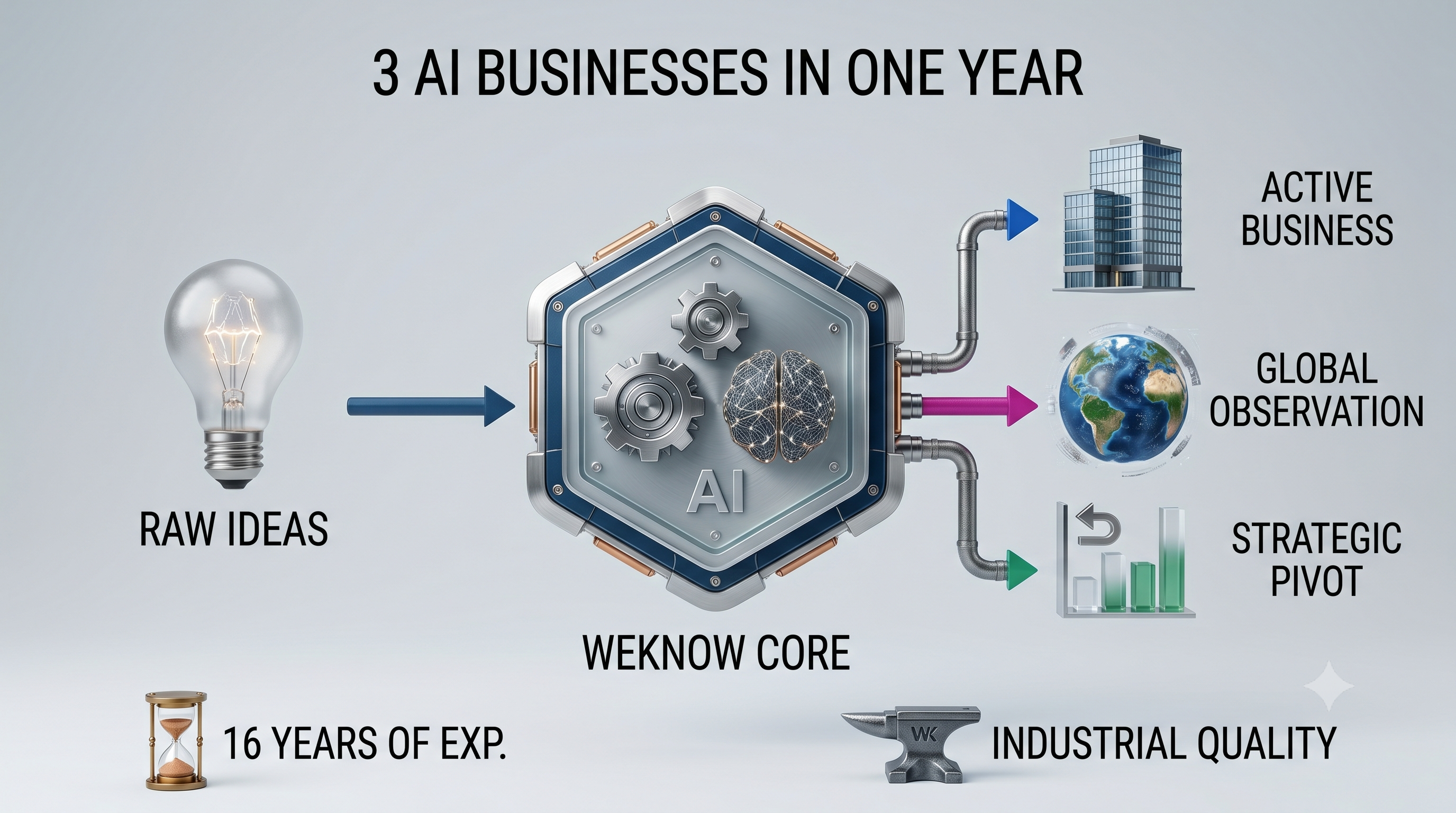
I saw this phenomenon mentioned in a YouTube video and I liked the framing: “Software as Content.” Your ideas no longer turn into blog posts — they turn into a deployment. The audience will be larger or smaller depending on the distribution market you choose or you had. And what it really enables is the process of incubating ideas that I already talked about on this blog: Case Study: WeKnow Inc as a Business Incubator a while ago.
So what does this look like in real life, you might be asking? Let’s look at my latest real-life “Software as Content.”
My partner told me that a prospect really liked a Kanban we had inside an internal tool (another example of “software as content”) and suggested we build him something small, like a CRM, to lock him into the deal.
After going back and forth on whether to put it inside the admin section of our real-estate portals for Propiedades Costa Rica and Panama, or spin it up on a subdomain, and a long etcetera, we arrived at a few conclusions:
- Pure CRM companies are getting destroyed in the stock market, with drops of 75% and more.
- That proves CRMs are commoditized — anyone can build their own, and they do.
- At the same time we found that vertical CRMs (like real-estate ones) are moving in the opposite direction: they’ve raised prices and grown their subscriber base. Specialization still pays, and AI does not commoditize everything.
So we decided to build our own CRM for Real Estate with a Central American focus. We agreed on it on a Thursday at 11 pm. By Sunday at 3 pm the CRM was live, integrated with the portals, so that when a user registers they can opt-in to our CRM or not. If they do, the leads from the portal are pushed via API into our CRM.
And that, ladies and gentlemen, is how unificar.pro* was born. It’s more than vibe coding. It’s an integrated platform that we can keep extending, and it now lets us offer:
- A platform to generate real-estate leads
- A platform to manage the leads we generate
An end-to-end solution, each piece running in its own separate environment.
Now we need to focus on the rest of the equation: getting traction and customers. We are already on that.
And guess what — this week I already have another “software as content” idea. Actually, two related ones. But I’ll tell you about those later.
Happily, not every blog needs to become a business, like this one :P
* Some times is harder to find a good domain: than a good product.